How to answer “What is your weakness”?
May 07, 2024
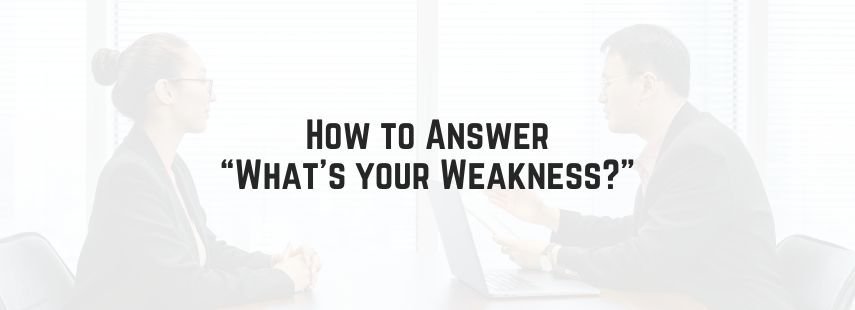
“What is your weakness?”
That’s a tricky question in a job interview. It’s pretty common, and it can make even the most prepared person nervous. But don’t worry! I’ll show you how to handle this question well and use it to your advantage.
It’s important to be honest, but you also need to be smart about it. Don’t mention a weakness that would directly affect your ability to do the job. For example, if the job needs someone who’s good at speaking to crowds, saying you’re scared of crowds isn’t a good idea.
Good Weaknesses:
1. Skills You’re Working On: Are you trying to get better at something related to the job? Talking about this shows you’re proactive about learning and improving.
2. Things You’re Trying to Get Better At: Maybe you’re a bit of a perfectionist. That’s a good thing, but you can also talk about how you’re trying to balance that with getting things done efficiently.
3. Soft Skills: Maybe you sometimes find it hard to balance work and personal life. Admitting this shows you know yourself, and you can talk about what you’re doing to manage your time better.
Once you’ve picked a weakness, use the STAR method to talk about it:
Situation: Quickly explain a time when your weakness caused a problem.
Task: Describe what you were trying to do at that time.
Action: Talk about what you did to deal with your weakness. Did you take a class, get help from someone, or try a new approach?
Result: Explain how things turned out because of what you did. Did you become more efficient, work better with others, or improve overall?
For example:
“I sometimes have trouble giving tasks to other people, especially when I’m confident in my own abilities and I have a tight deadline. In my last job as a project manager, I was leading a team working on a new marketing campaign. The project was complicated, and I felt like I needed to control everything to make sure we finished on time. But I realized that this was making my team unhappy and causing problems.
Action: To get better, I took a class on how to give tasks to people and started talking to my team more often to make sure they knew what I wanted.
Result: By giving tasks better, I had more time to look at the big picture and solve problems. This made my workload lighter and made my team happier. We finished the project on time and didn’t spend too much money.”
How you talk is just as important as what you say. Be confident, look people in the eye, and be positive. Talk about how you’re working to get better. This shows that you know yourself and that you’re always trying to learn and improve – things that employers like.
Extra Tip: Ask Them a Question
If you’re feeling brave, you can use this question to show how much you know about the company. After talking about your weakness, you can say something like, “But I’m always ready to learn. I noticed that your company cares a lot about [something that’s related to your weakness]. Can you tell me more about that?” This shows that you’re interested in the company and that you’ve done your homework.
If you follow these tips, you can turn the “what’s your weakness?” question from something scary into a chance to show that you know yourself, that you’re always trying to get better, and that you’re right for the job. Remember, everyone has weaknesses, but what’s important is that you’re always trying to be better – and that’s something every employer likes to see.”
Latest Blogs
Understand the Tax Policy in the Gulf Region
Jan 05, 2026
Know the Cost of Living in the Gulf Region
Dec 29, 2025

The Expanding Gulf Market: Know the Faster-Growing Sectors
Dec 19, 2025

UAE Leads Arab Region in Automotive Investment for 2024
Jan 22, 2025

Stress Management Myths You Need to Stop Believing
Jan 21, 2025